
Changing patterns
Noticing and updating repeated thoughts, reactions or behaviours that have become automatic.
If you are new to hypnotherapy, it is normal to feel unsure. This page explains what it is, what it is not, and what you can expect if we work together.
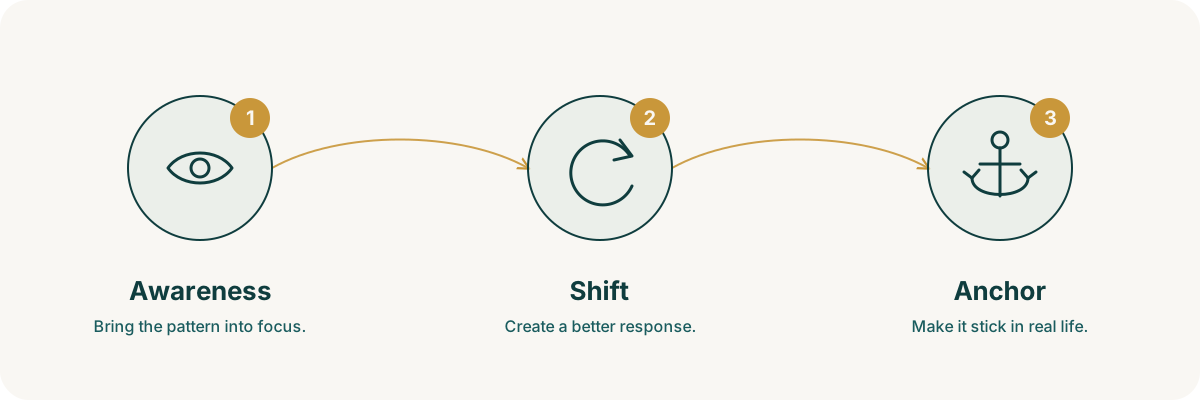
Most sessions follow a simple arc: understand the pattern clearly, help the system practise a different response, then make that response easier to access in real life.
Hypnotherapy uses guided relaxation and steady attention to help you work with the more automatic parts of the mind: habits, emotional responses, body feelings, memories, associations and beliefs.
You are not asleep. You are not unconscious. Many people describe it as similar to being deeply absorbed in a book, music, a film or a familiar route, but used carefully for change.
The purpose is to help old patterns become less dominant and support new responses that fit who you are now.
I am not trying to make you perform hypnosis properly. We do this together. You remain in control, you can speak, move or stop at any point, and nothing is done without your agreement.
Most uncertainty about hypnotherapy comes from myths. The real work is quieter, more ordinary and more respectful than people often imagine.
I would rather you arrive with honest questions than pretend to be certain. Scepticism is welcome. The work does not depend on you believing in anything mystical. It depends on whether the approach feels useful, respectful and right for the pattern you want help with.
Different problems can share similar mechanisms: learned patterns, body responses, habits, confidence, thoughts and new ways of responding.
Noticing and updating repeated thoughts, reactions or behaviours that have become automatic.

Helping the body and mind practise steadier responses to safety, pressure and uncertainty.

Building self-trust, steadiness and a less punishing inner voice.

Helping overthinking, anxiety or self-doubt move somewhere useful rather than loop.

Working with the emotional, identity or comfort pattern underneath a behaviour.

Making a new response feel possible, believable and easier to repeat in real life.
Every person is different, but the structure is kept clear so you know where you are.
We talk about what has been happening, what you want to change, and anything that helps us understand the pattern.
You are guided into a calm, absorbed state. This is gentle and you remain aware and in control.
We use imagery, suggestions, parts work or other appropriate methods to support new responses.
We talk about what to notice afterwards and how the work connects with ordinary life.

The free consultation is not a test, and you do not need to know exactly what to say. It is a chance to explain what has been going on, ask questions, and get a sense of whether this work feels right.
If hypnotherapy is not the best fit, I will say so. If it may help, we can talk through what sessions might look like and what the next step would be.